

While the eyes of the world are focused on the Arctic, a far more dangerous fire is burning in North America. The US civil war risk 2026 has reached its highest level since the 1860s. President Trump’s foreign policy escalations are widely viewed by analysts as desperate attempts to distract from a domestic interior that is spiraling into chaos.
The Spark: The Death of Renee Nicole Good
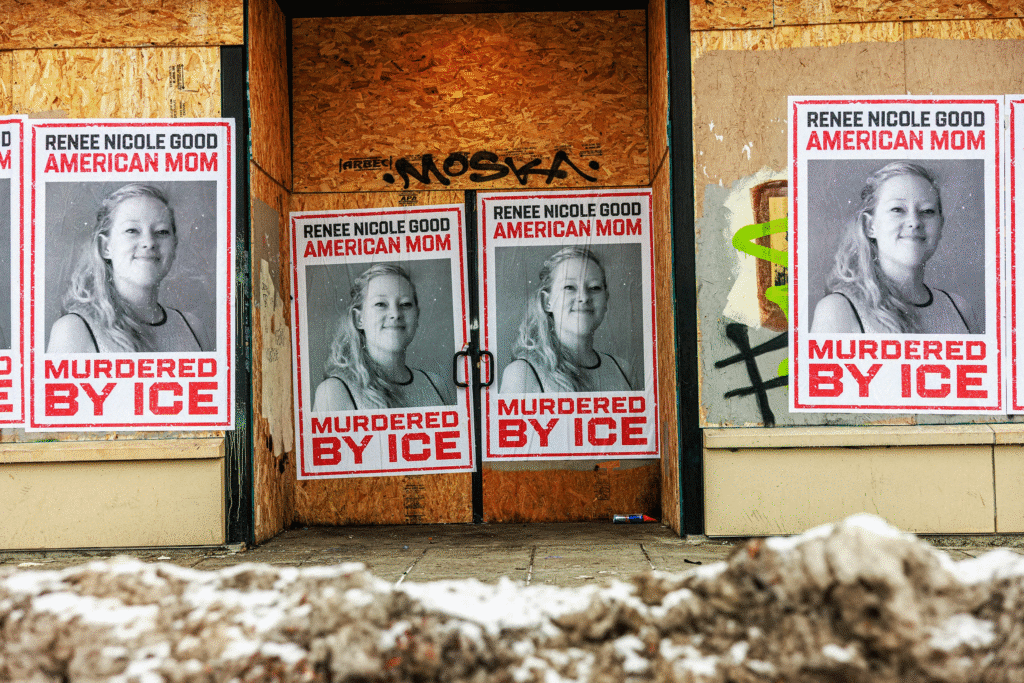
The current explosion of unrest can be traced back to a single, tragic event earlier this month: the shooting of Renee Nicole Good in Minneapolis. Ms. Good was not an armed combatant. She was a poet and a mother protesting federal immigration crackdowns. Her death at the hands of a federal agent became a viral symbol of government overreach.
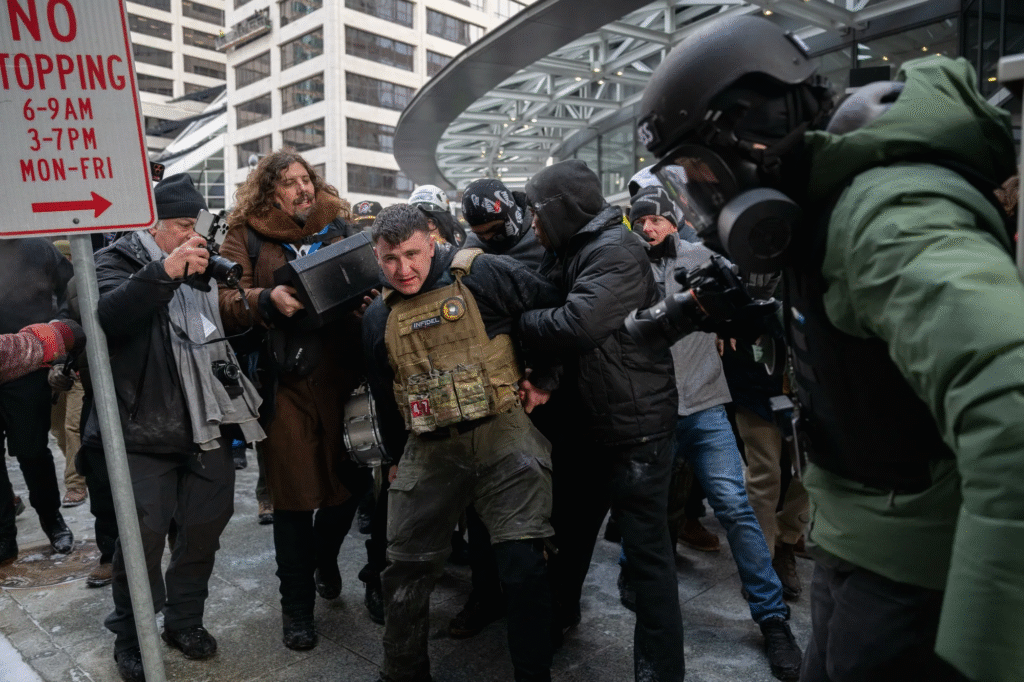
In the weeks since, protests have not subsided; they have evolved. What began as peaceful demonstrations has morphed into organized resistance. We are seeing the rapid rise of “dual sovereignty” zones. These are areas where local mayors and governors are using state police to block federal agents from entering their cities.
This standoff creates a constitutional nightmare. When armed federal agents face off against armed local police, the US civil war risk 2026 becomes immediate and kinetic. There is no legal framework for resolving a shootout between two branches of American law enforcement.
The Political Divide
The political context makes de-escalation almost impossible. The midterm elections are scheduled for November. Both parties view this election not as a contest of ideas, but as a battle for survival.
Republicans argue that the protests are led by “domestic terrorists” who want to destroy the nation. Conversely, Democrats and independents see the administration as an authoritarian regime that has lost its legitimacy. There is no middle ground.
Recent polling data from late 2025 already showed that 50% of Americans believed a civil conflict was likely. Since the shooting of Ms. Good, that number has almost certainly risen. The psychological barrier to violence has been shattered.
The Economic Impact of Unrest
The internal conflict is also destroying the American economy from the inside out. Major cities, which are the engines of US commerce, are currently paralyzed by strikes and blockades. Supply chains are breaking down as truckers refuse to drive through protest zones.
Furthermore, the uncertainty is causing capital flight. Investors are pulling money out of US markets, fearing that the dollar will collapse if the government fractures. This economic pain only fuels more anger on the streets, creating a doom loop of instability.
A Distraction or a Strategy?
Many international observers believe the President’s aggressive moves in Greenland and Venezuela are linked to this domestic crisis. Historically, leaders facing internal rebellion often start foreign wars to rally the population around the flag.
However, this strategy appears to be backfiring. Instead of uniting the country, the foreign conflicts are dividing it further. Protesters are now carrying signs opposing the “Imperial War” in the Arctic alongside signs demanding justice for Renee Nicole Good.
In summary, the US civil war risk 2026 is no longer a theoretical debate. It is a live event unfolding on the streets of Minneapolis, Portland, and Atlanta. The center is not holding, and the world is watching to see if the American experiment will survive the year.
Article Sources
Killing of Renee Nicole Good: Incident Report & Dispatch Details”
- Minneapolis Star Tribune
- https://www.startribune.com/renee-nicole-good-ice-shooting-injuries-incident-report-details/601565066
“Who was Renee Nicole Good? The woman killed in ICE Minneapolis shooting”
“Renee Nicole Good shooting casts scrutiny on ICE’s use of deadly force”
https://www.theguardian.com/us-news/2026/jan/10/will-ice-agent-face-consequences-renee-nicole-good
The Guardian



0 Comments