

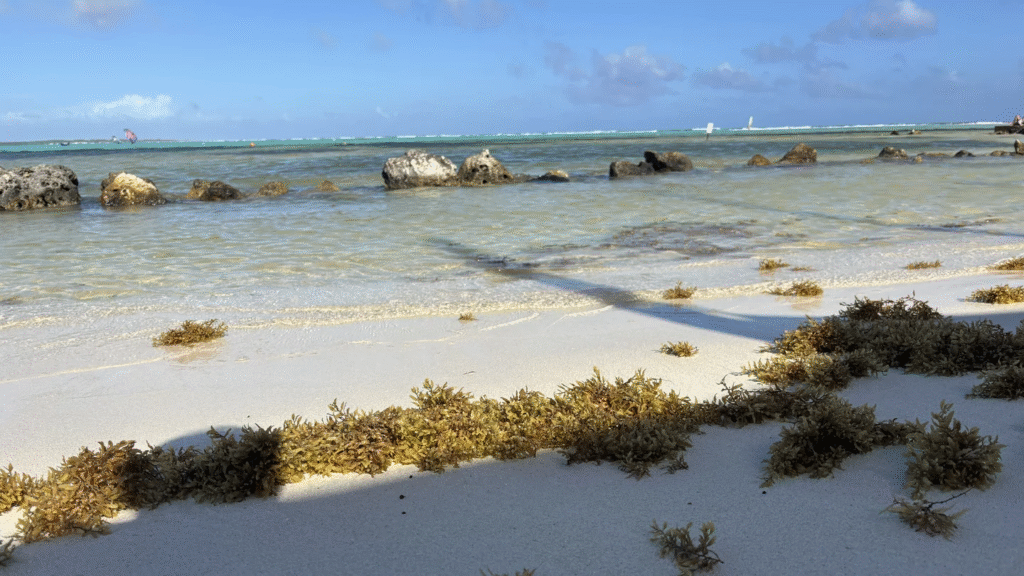
An unexpected event occurred last Sunday at Sorobon Beach. Specifically, visitors and local business owners saw the first signs of sargassum for 2026. While many people enjoyed a quiet day, brown patches of seaweed began entering the bay. This early arrival has immediately caused widespread concern among the community.
Why This Timing Is Unusual
Usually, sargassum does not reach the ABC islands until March or April. However, nature is behaving differently this year. This arrival in early January is a worrying signal for authorities. Consequently, the island is now on high alert.
Memories of the 2025 Crisis
The community still remembers the massive crisis of 2025. Last year, record amounts of seaweed hit the coast. This caused major problems for tourism and the environment. Therefore, residents are asking serious questions about what to expect for the rest of 2026.
Threat to the Local Economy
Local entrepreneurs at Sorobon are watching the horizon closely. Specifically, windsurf schools and beach bars fear for their businesses. Sorobon is famous for its clear, shallow water. If sargassum arrives in bulk, it ruins the experience for athletes and families. Furthermore, rotting seaweed creates a terrible smell that drives tourists away.
Environmental Impact and STINAPA
STINAPA is the organization that protects Bonaire’s nature. Last year, they led a massive cleanup effort. According to their data, 2025 saw the highest volume of sargassum in history. Additionally, the seaweed harms marine life. It can suffocate mangroves and block sea turtles from nesting.
A Call for Island-Wide Action
Volunteers like Chris Lincoln are already monitoring the situation. Although the outlook seems difficult, rapid planning can help. The community realizes that this problem requires everyone to work together. It is not just a job for the government.
Preparing for a Difficult 2026
This early arrival serves as a clear wake-up call. If this pattern continues, 2026 will be a very hard year. Authorities must now check if they have enough resources. Specifically, they need equipment and staff to handle a new wave. For now, everyone is hoping the wind shifts the seaweed away from the coast.



0 Comments